
There’s something about fresh basil that makes a kitchen smell like summer. And when you have a bunch of it on hand, one of the very best things you can make is a simple homemade pesto recipe.
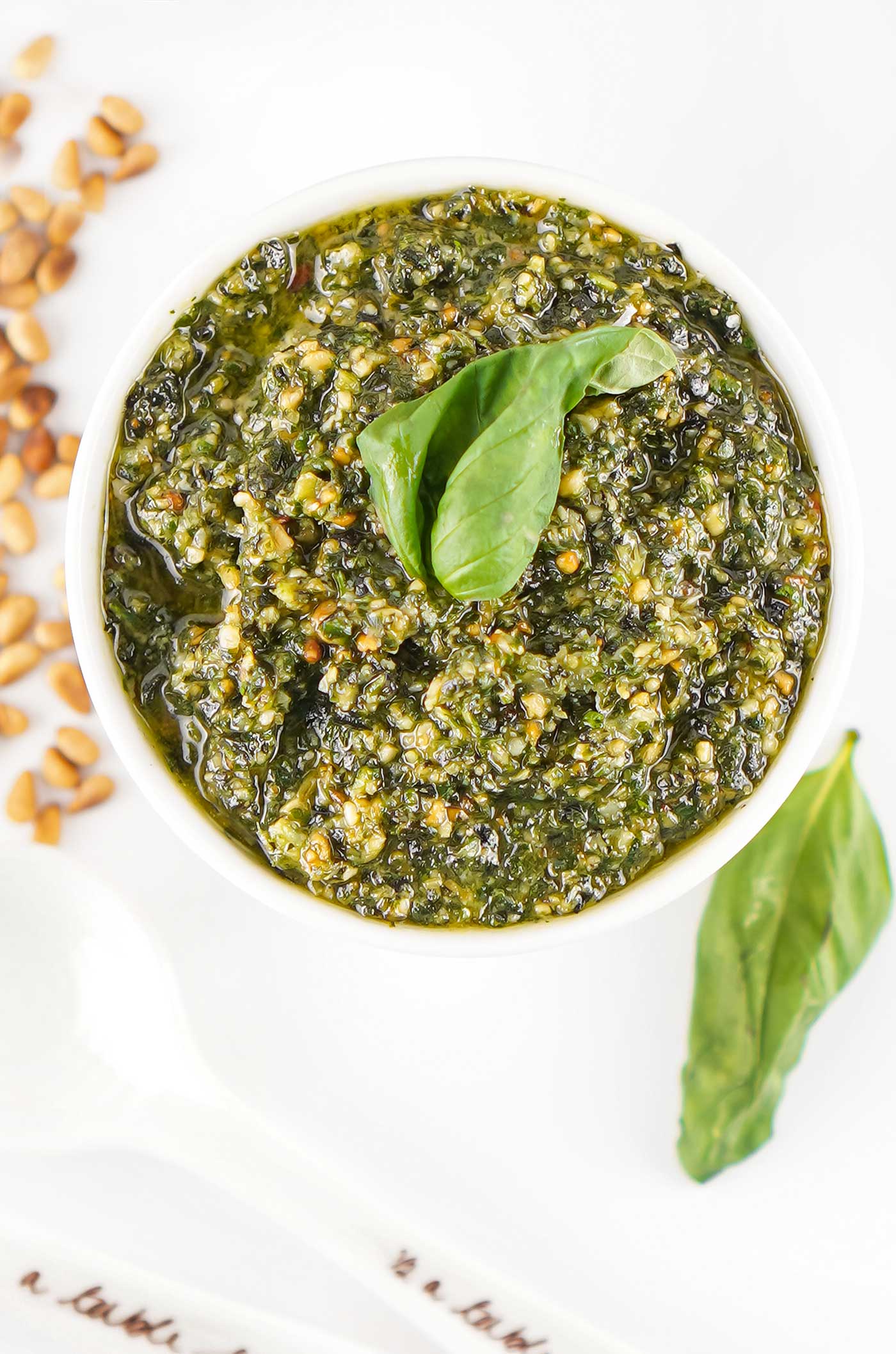
If you’ve only had pesto from a jar, homemade pesto is such a treat. It tastes brighter, fresher, and much more flavorful, and the best part is that it takes just a few minutes to make.
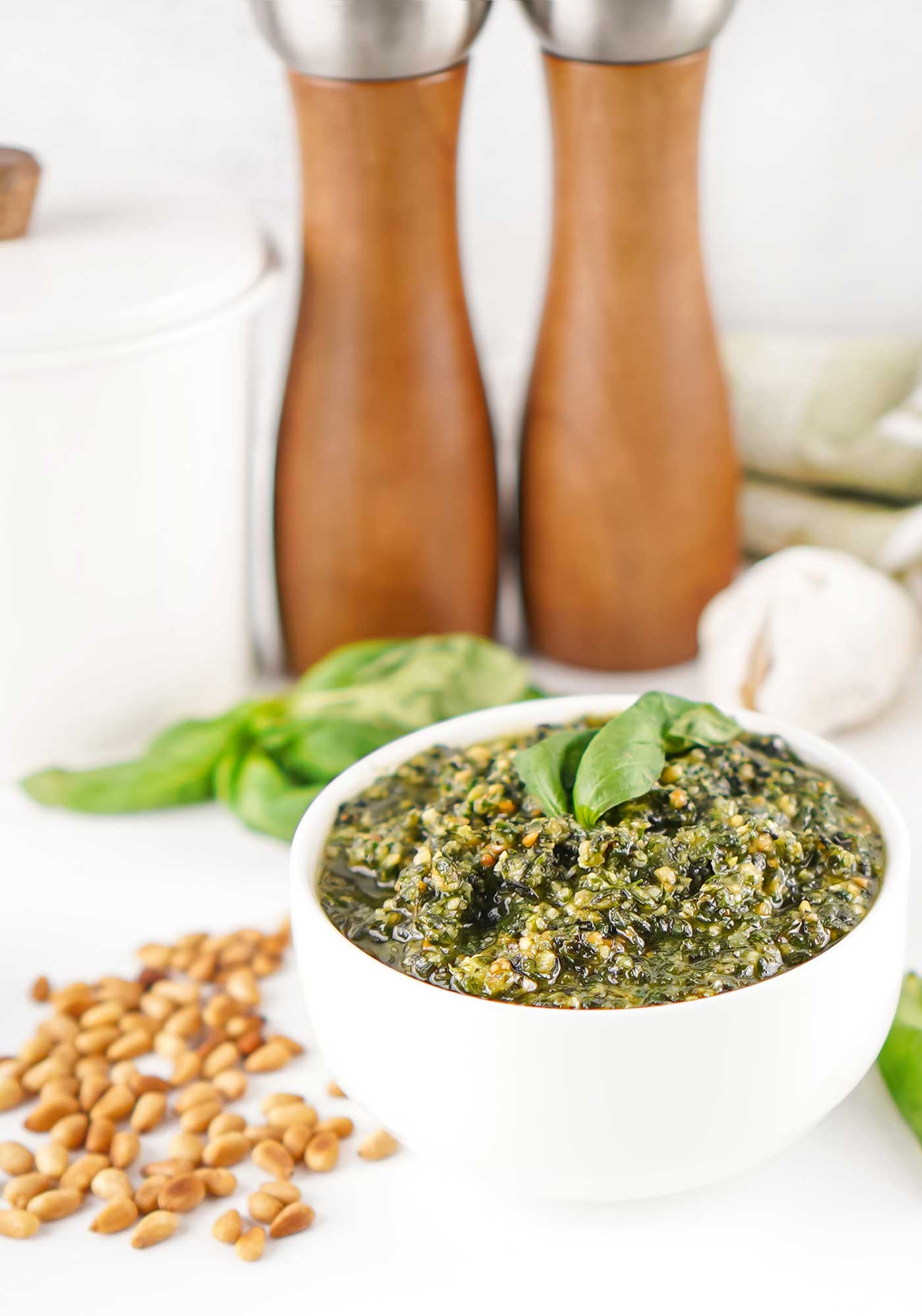
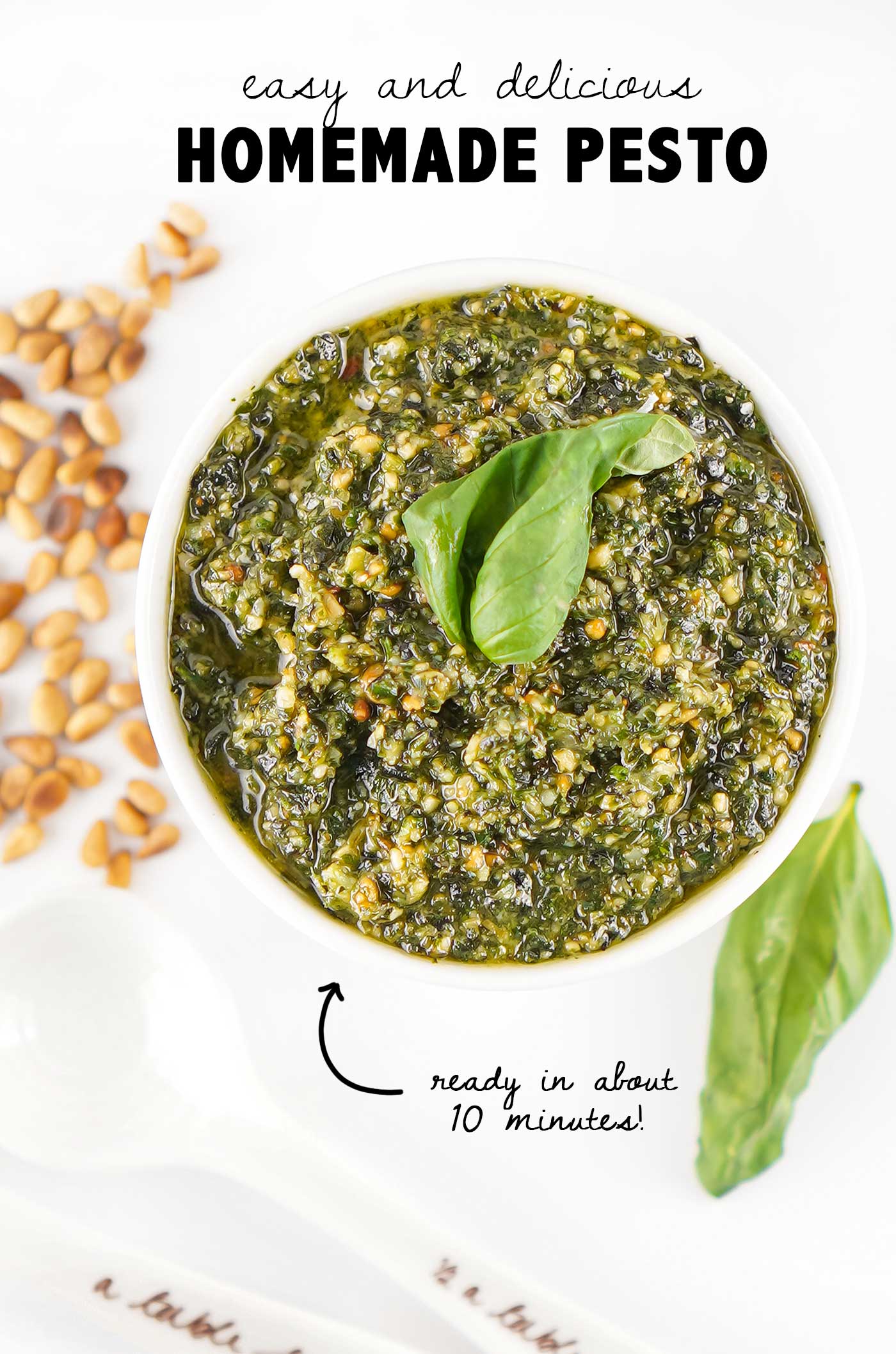
Fresh basil, Parmesan cheese, toasted pine nuts, garlic, and olive oil come together in the food processor to create a creamy, flavorful sauce that can be used in so many different ways.
And truly, this is one of those recipes that makes you wonder why you haven’t been making it yourself all along.
Why You’ll Love This Homemade Pesto Recipe
Homemade pesto might sound a little fancy, but there’s really nothing complicated about it. Everything goes into the food processor, gets blended together, and that’s about it.
It’s quick enough to make for a weeknight meal, but the fresh flavor makes it feel a little more special.
A few reasons to love this recipe:
- It takes only a few minutes to prepare.
- You need just a handful of simple ingredients.
- Fresh basil gives it incredible flavor.
- You can easily adjust the consistency to your preference.
- It works as a sauce, spread, dip, or topping.
- A little pesto can add a lot of flavor to an otherwise simple meal.
It’s especially handy during the summer months when basil plants seem to grow faster than we can use them.
Ingredients for Homemade Basil Pesto
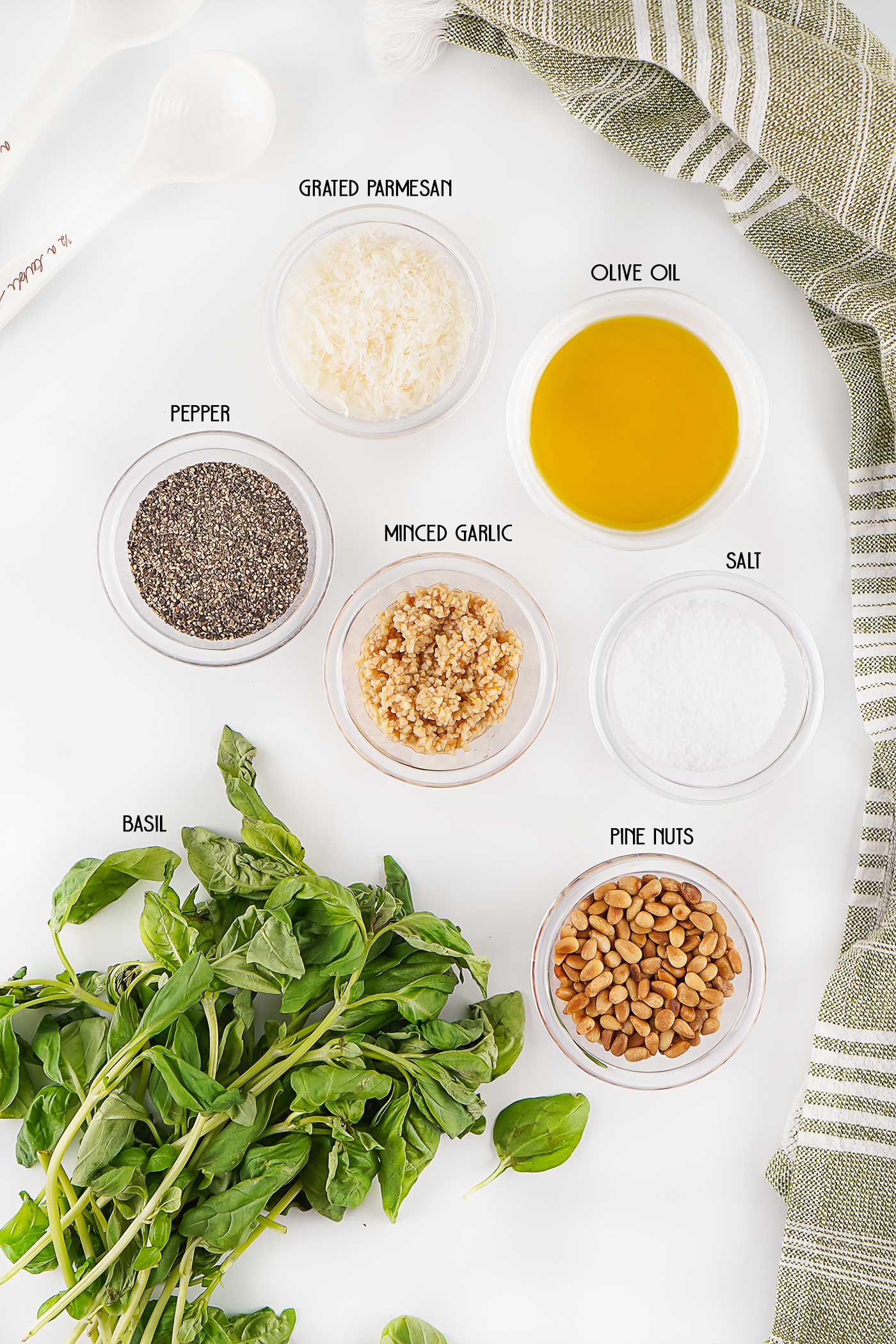
You only need seven ingredients to make this easy pesto.
Fresh basil: Fresh basil is the star of the recipe, so this is definitely the time to use those beautiful green leaves.
Olive oil: Olive oil helps bring everything together and gives the pesto its smooth, spoonable consistency.
Pine nuts: Toasting the pine nuts before adding them makes a big difference in the overall flavor.
Parmesan cheese: Freshly grated Parmesan adds a salty, savory element and helps give the pesto its signature flavor.
Garlic: A tablespoon of minced garlic gives the pesto plenty of flavor without overpowering the basil.
Salt and pepper: You don’t need much. Parmesan already adds some saltiness, so start small and adjust after tasting if necessary.
Why Toasted Pine Nuts Make a Difference
One small step that I don’t recommend skipping is toasting the pine nuts.
You can technically make pesto with untoasted pine nuts, but toasted pine nuts have a warmer, richer flavor that makes the finished pesto taste so much better.
To toast them, place the pine nuts in a dry skillet over medium heat. You don’t need to add oil.
Stir or move them around frequently so they toast evenly and don’t burn. Continue cooking until they become lightly golden and fragrant.
Keep a close eye on them because nuts can go from perfectly toasted to burned fairly quickly.
Once toasted, they’re ready to use right away.
How to Make Homemade Pesto
Start by removing the stems from the fresh basil. Add the basil leaves to your food processor along with the olive oil, toasted pine nuts, freshly grated Parmesan, minced garlic, salt, and pepper.
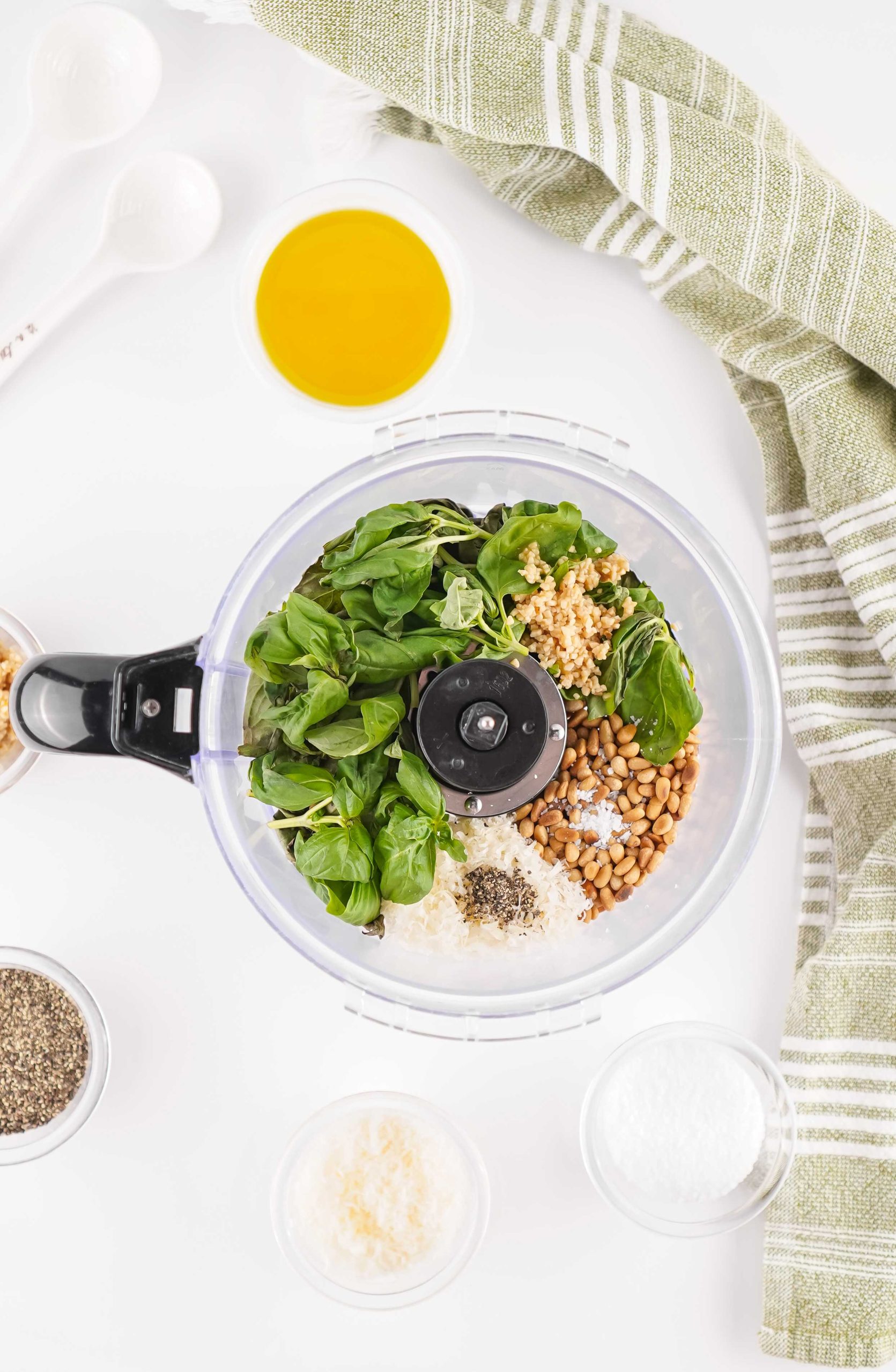
Process everything until the mixture is smooth and well combined.
That’s it.
Seriously.
You can stop and scrape down the sides of the food processor if necessary, then blend again until the pesto reaches the consistency you like.
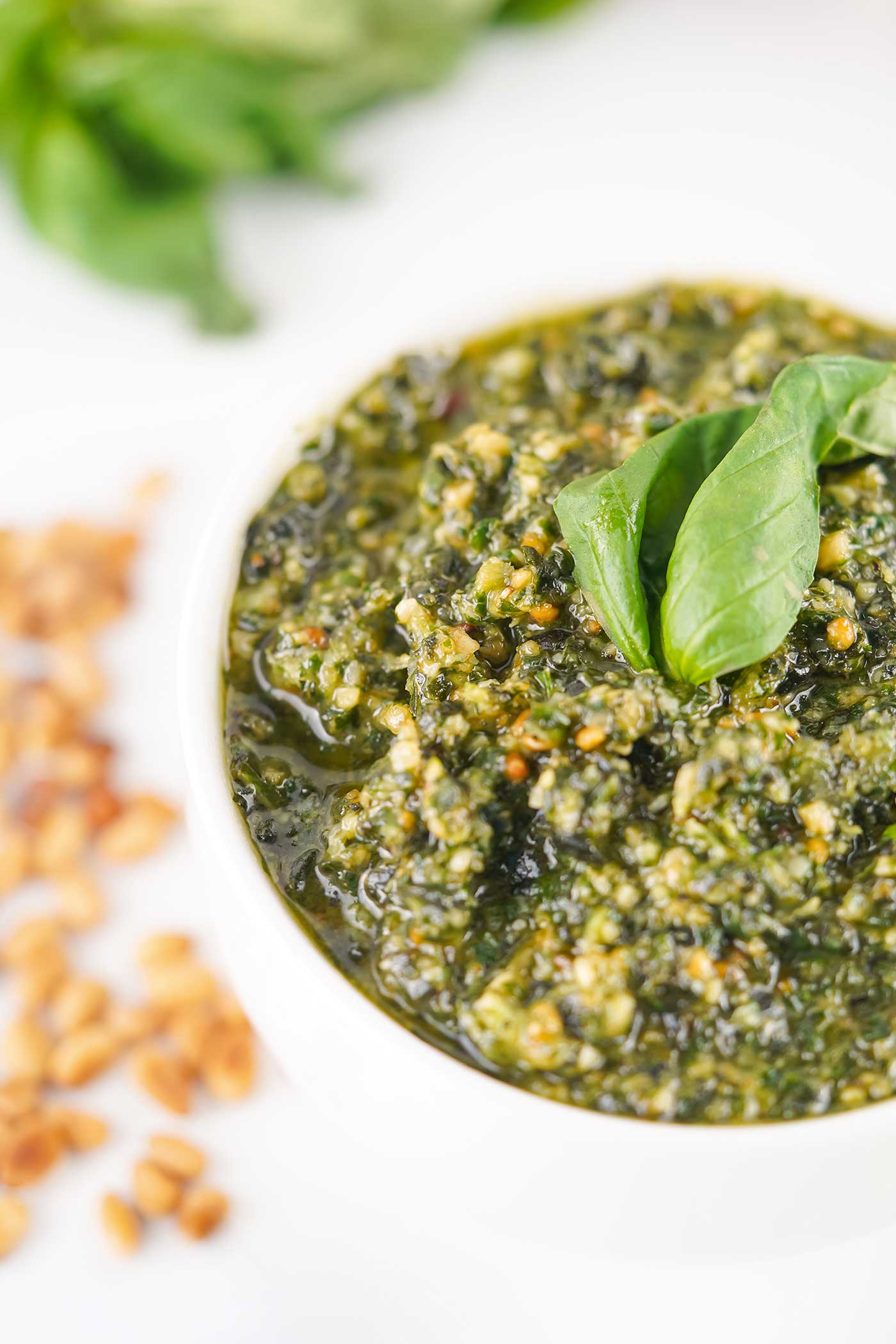
If it seems thicker than you prefer, add a little more olive oil. If you want a stronger basil, Parmesan, or garlic flavor, you can adjust those ingredients as well.
One of the nice things about a homemade pesto recipe is how easy it is to customize.
How to Adjust the Pesto Consistency
There really isn’t one perfect consistency for pesto because it can depend on how you plan to use it.
For tossing with pasta, you may prefer a slightly thinner pesto. Adding a small amount of additional olive oil can help loosen it.
If you’re using pesto as a sandwich spread, pizza topping, or appetizer, you may like it a little thicker.
I recommend making the recipe as written first, tasting it, and then adjusting from there.
Just remember that it’s always easier to add a little more olive oil than to fix pesto that has become too thin.
Ways to Use Fresh Pesto
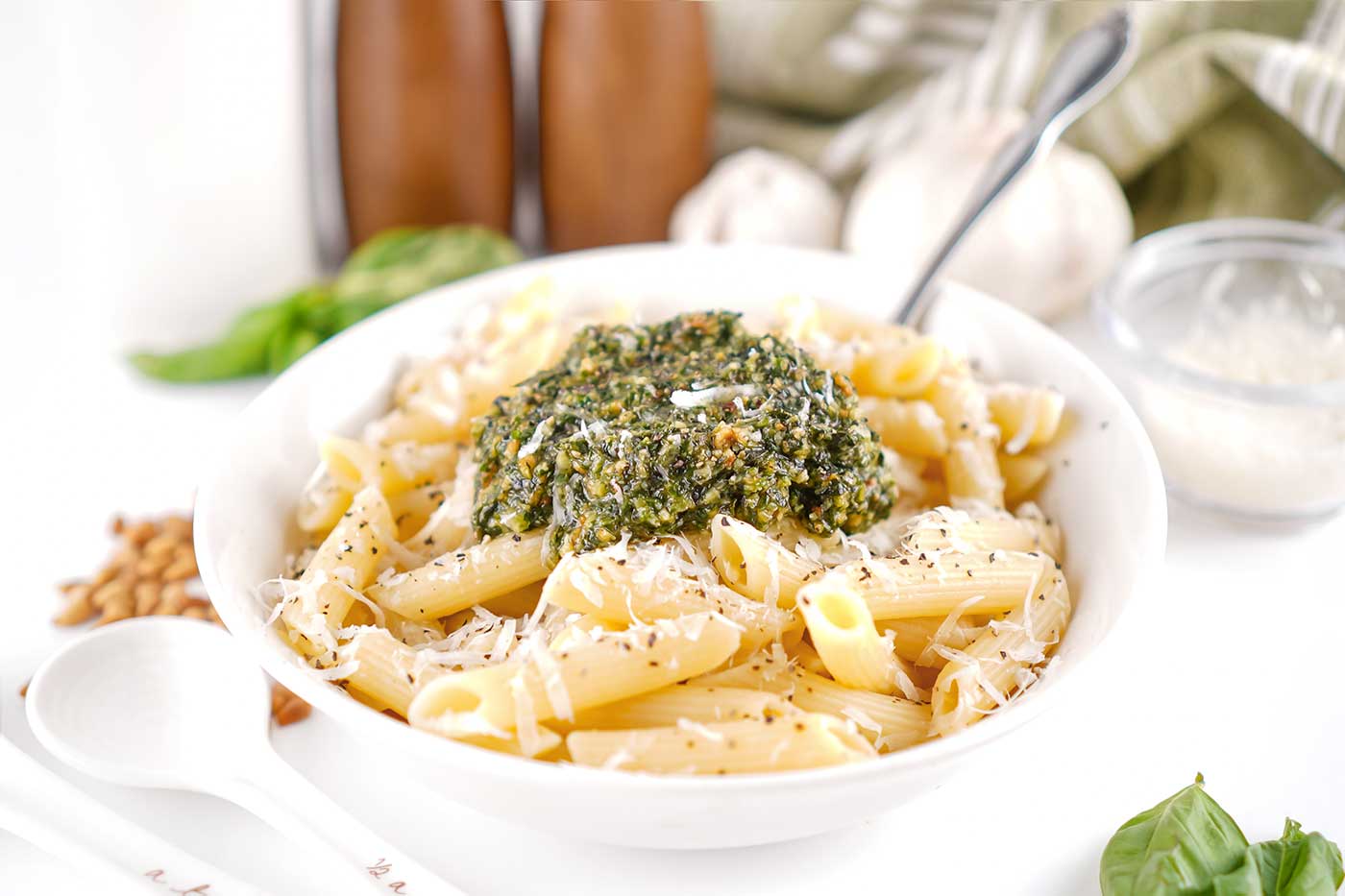
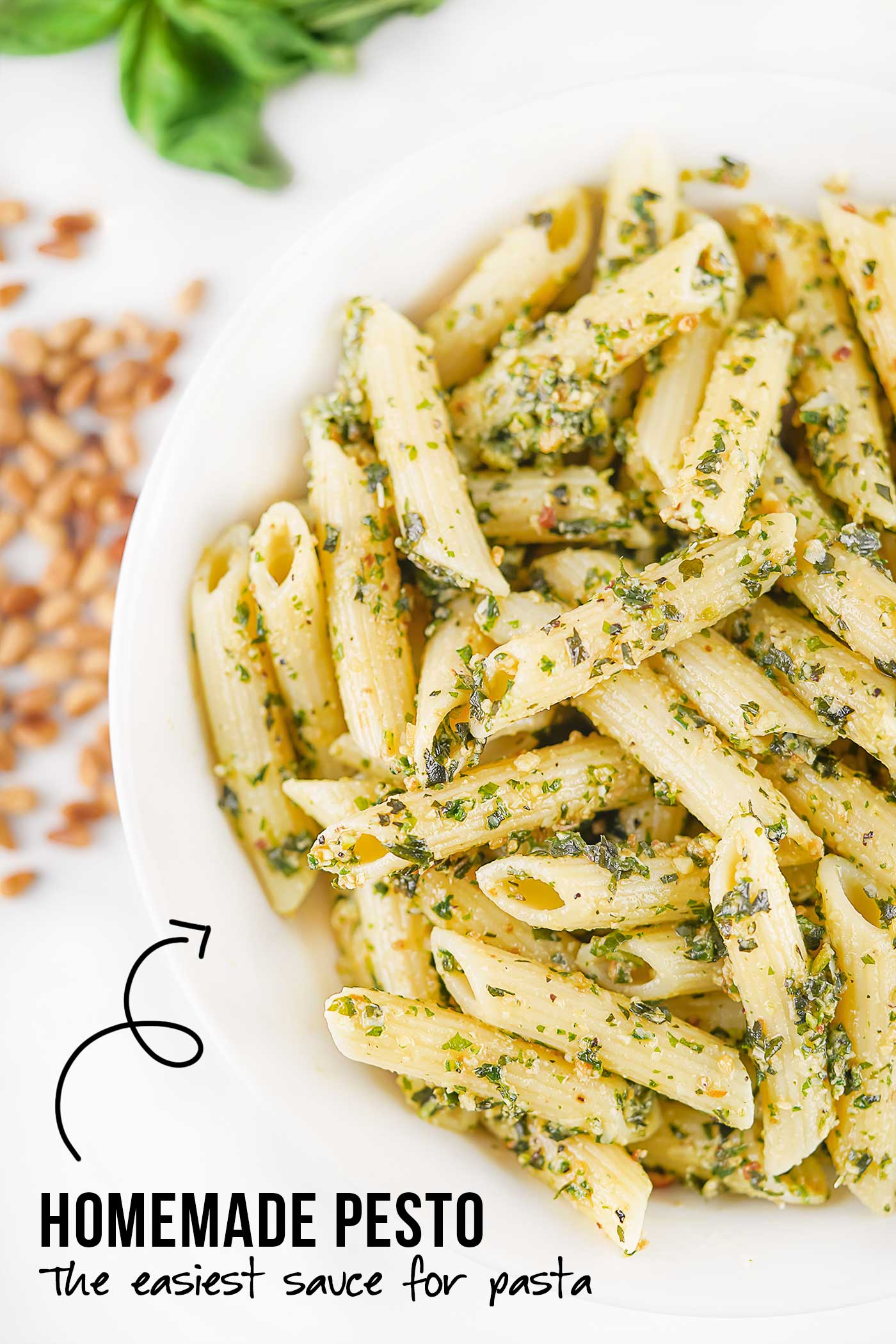
One of the easiest and most popular ways to use homemade pesto is with pasta. Toss it with warm penne, spaghetti, linguine, or your favorite pasta shape for a quick and flavorful meal. You can keep it simple with a little extra Parmesan, or add grilled chicken, cherry tomatoes, or roasted vegetables to make it more filling.
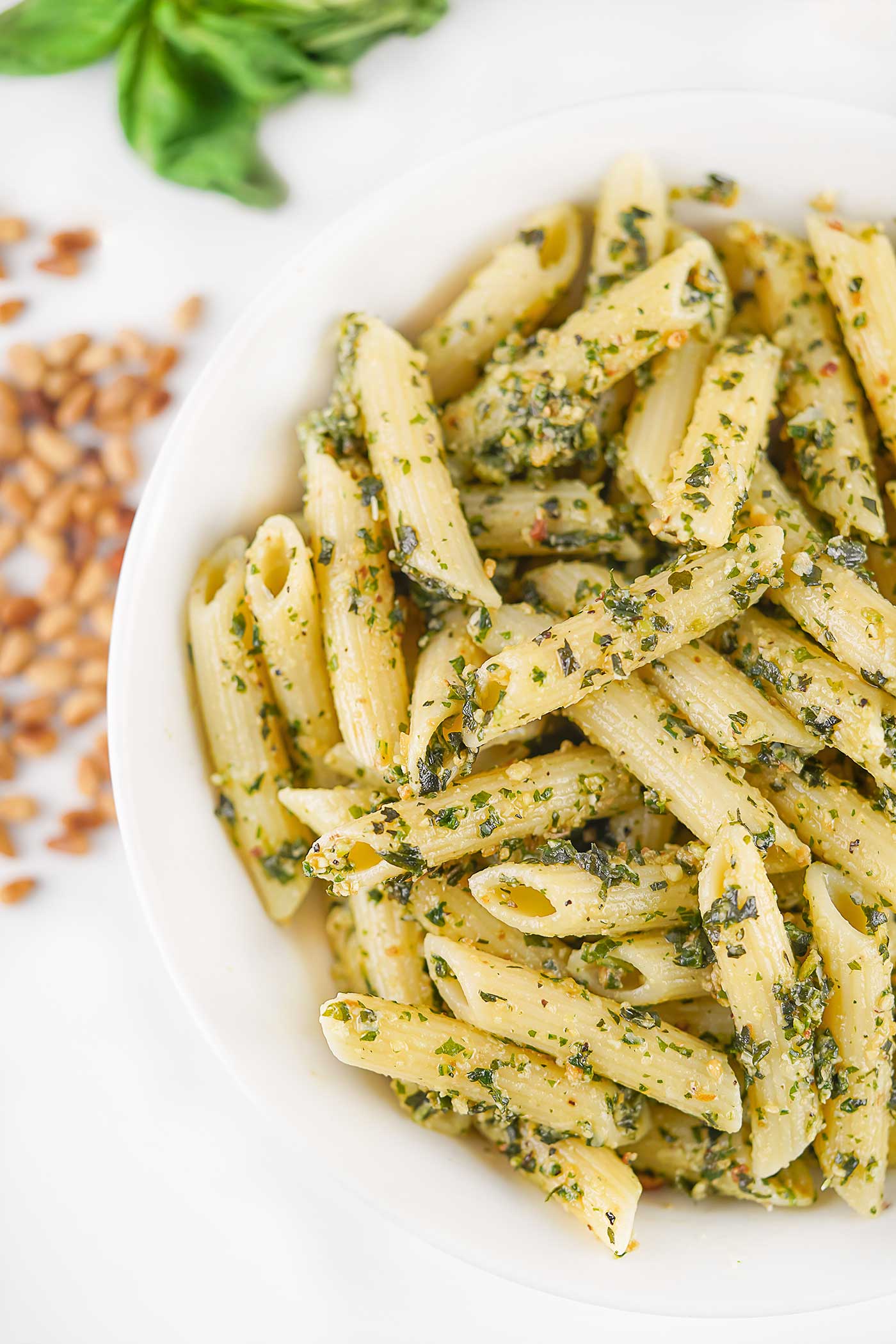
Pesto is also delicious spread on toasted bread or crostini, added to a sandwich or panini, or spooned over grilled chicken, fish, or vegetables.
You can use it as a pizza sauce in place of traditional tomato sauce, stir a spoonful into soups, or add a little to scrambled eggs or a frittata.
For an easy appetizer, serve pesto with fresh bread, crackers, mozzarella, or sliced tomatoes.
Having a small container of pesto in the refrigerator is almost like having an instant flavor booster ready to go.
How to Store Homemade Pesto
Transfer your finished pesto to an airtight container and store it in the refrigerator for up to one week.
Because the surface can darken when exposed to air, keeping the container tightly sealed is important.
For this particular recipe, I prefer making a fresh batch as needed and keeping it refrigerated rather than freezing it.
Fortunately, it’s so quick to prepare that making another batch doesn’t require much effort.
Tips for the Best Homemade Pesto
Use fresh basil whenever possible. Since basil is the main ingredient, fresh, healthy leaves will give you the best flavor and color.
Toast the pine nuts. It’s an extra step, but one that is absolutely worth doing.
Freshly grate the Parmesan. Pre-shredded Parmesan can work in a pinch, but freshly grated cheese blends more smoothly and has better flavor.
Taste before adding additional salt. Parmesan is naturally salty, and you can always add more after blending.
Adjust the olive oil gradually. If you prefer a thinner pesto, add a little additional oil at a time until the consistency is just right.
And don’t be afraid to make the recipe your own. A little extra garlic, Parmesan, or basil can easily be added based on what tastes best to you.
Easy Homemade Pesto Recipe with Fresh Basil
Equipment
Ingredients
- 2 cups fresh basil leaves, stems removed
- 1/2 cup olive oil
- 1/4 cup toasted pine nuts
- 1/4 cup freshly grated Parmesan cheese
- 1 tbsp minced garlic
- 1/8 tsp salt
- 1/8 tsp Black Pepper
Instructions
- Remove the stems from the fresh basil leaves.
- Add the basil, olive oil, toasted pine nuts, Parmesan cheese, minced garlic, salt, and pepper to a food processor.
- Process until smooth and well combined, stopping to scrape down the sides of the bowl as needed.
- Taste the pesto and adjust the olive oil, Parmesan, garlic, salt, or pepper according to your preference.
- Transfer the pesto to an airtight container and refrigerate for up to one week.
Notes
A Simple Sauce Worth Making from Scratch
Some homemade recipes require enough extra work that the store-bought version is awfully tempting.
Pesto isn’t one of them.
With only a few ingredients and about three minutes of prep time, this homemade pesto recipe is incredibly easy to make. And that fresh basil flavor is hard to beat.
Whether you’re tossing it with pasta, spreading it onto a sandwich, adding it to chicken, or simply serving it with some crusty bread, it’s a simple recipe that can make an ordinary meal taste a whole lot better.
If you have fresh basil waiting to be used, grab the food processor and give this one a try.
You may never look at that little jar of pesto quite the same way again.






Leave a Reply